
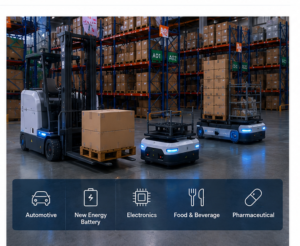
How to Choose the Right AMR for Your Industry
Choosing an Autonomous Mobile Robot is not simply a matter of comparing payload capacity and price. Different industries have different materials, production processes, safety requirements and operating environments. An AMR that performs well in an electronics factory may not be suitable for a heavy machinery plant, cold-storage warehouse or food-processing facility. The following factors should
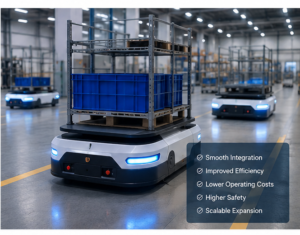
How to Deploy AMR Robots in Your Factory: A Step-by-Step Guide
Autonomous Mobile Robots can improve internal material flow, reduce repetitive transport work and help factories build more flexible logistics operations. However, successful AMR deployment involves much more than purchasing robots and placing them on the factory floor. The project must consider transport processes, payloads, routes, traffic conditions, charging, safety, software integration and employee responsibilities. A
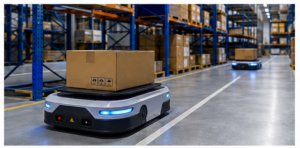
How AMR Robots Improve Factory Material Handling Efficiency
Efficient material handling is essential to maintaining smooth production, controlling labor costs and reducing unnecessary downtime. In many factories, however, raw materials, components and finished products are still transported manually by workers, carts or conventional forklifts. Autonomous Mobile Robots, commonly known as AMRs, provide a more flexible way to automate these repetitive internal logistics tasks.